
- calendar_today August 10, 2025
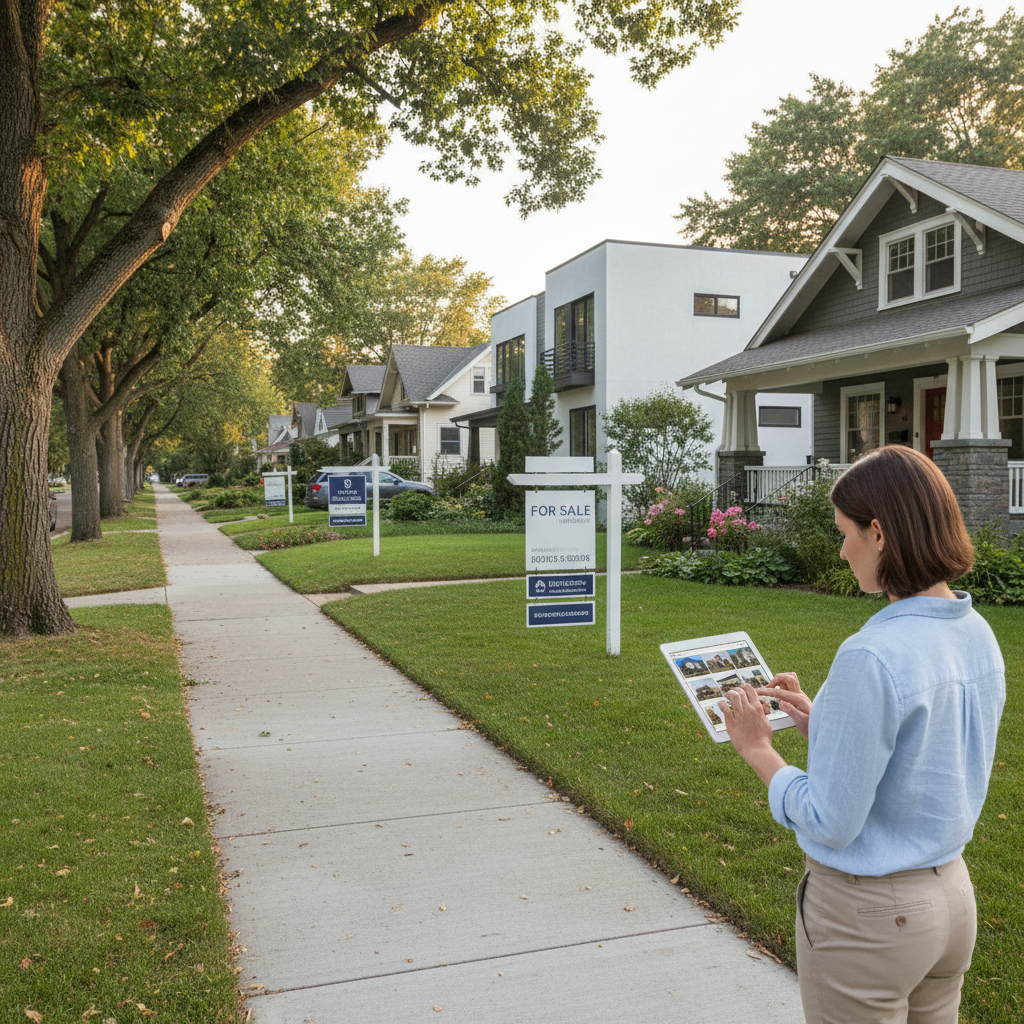
The dream of owning a home is growing more elusive in 2025, and Ohio is feeling the effects of a deep real estate chill. From the urban cores of Cleveland and Columbus to smaller markets like Dayton, Youngstown, and Lima, homebuyers are navigating a housing market that has slowed dramatically.
Rather than a crash, Ohio’s housing market is experiencing a slow, grinding freeze. Listings are down, financing is more expensive, and the affordability gap continues to widen — locking out buyers and leaving sellers hesitant to move.
Here are six major factors explaining why the Ohio housing market has stalled in 2025 — and what prospective buyers need to know about this new landscape.
1. The Lock-In Effect Keeps Homes Off the Market
Ohio homeowners are feeling the impact of the “mortgage rate lock-in effect.” With over 80% of mortgage holders statewide locked into rates below 4%, very few are motivated to sell. As of mid-2025, 30-year fixed mortgage rates are hovering near 6.9%, and trading up means significantly higher monthly payments.
This is leading to stagnant inventory across Ohio markets — including Cincinnati, Akron, and Toledo — where sellers are holding off and fewer listings are hitting the market.
“Homeowners feel trapped,” said Daryl Fairweather, Chief Economist at Redfin. “They can’t afford to sell because they can’t afford to buy again.”
2. Active Listings Remain Critically Low
According to Realtor.com’s June 2025 data, Ohio’s active listings are down 17% year-over-year. The drop in inventory is affecting both large metro areas and smaller cities like Mansfield, Springfield, and Marion.
In Columbus, where population growth has been strong, new listings are at their lowest levels in over a decade. And in Cleveland, many properties never even reach public listing platforms, as they’re sold off-market to cash buyers or investors.
“This is not just a supply problem — it’s a circulation problem,” noted Lawrence Yun, Chief Economist at the National Association of Realtors (NAR).
3. Affordability Reaches Its Worst Level in Two Decades
Historically, Ohio has been considered one of the more affordable housing markets in the U.S. But in 2025, that narrative is shifting. Mortgage rates near 7% combined with rising home prices have pushed the average monthly payment for Ohio buyers over $2,100, according to Mortgage Bankers Association (MBA) data.
The NAR’s Housing Affordability Index is now at its lowest point since 2006. Even though Ohio’s home prices are still below national averages, wages in many parts of the state have not kept up, especially in blue-collar towns and post-industrial regions.
“What we’re seeing is a market that’s functionally broken for middle-income Americans,” said Selma Hepp, Chief Economist at CoreLogic.
4. Builders Are Scaling Back New Construction
The pace of new home construction in Ohio has slowed in 2025. According to U.S. Census Bureau data, single-family housing starts are down nearly 13% statewide compared to the same period last year. Builders are pulling back due to high financing costs, waning demand, and unpredictable material prices.
In growth areas like the outer suburbs of Columbus and Dayton, builders are also contending with zoning delays and infrastructure constraints. While some multifamily developments continue, particularly in university towns like Athens and Kent, they’re not alleviating the pressure on the single-family home market.
Build-to-rent strategies are growing — but they’re diverting supply away from first-time buyers.
5. Prices Are Sticky and Still Rising in Key Markets
Despite fewer transactions, Ohio home prices continue to rise — especially in high-demand regions. Zillow’s June 2025 Housing Market Snapshot reports a 2.7% year-over-year increase in statewide median home values. Cities like Columbus, Dublin, and parts of Cincinnati’s east side have seen even sharper growth.
The reason: supply remains too low to meet buyer demand. Even with higher mortgage costs, limited inventory is keeping prices firm. In some neighborhoods, bidding wars persist, driven by cash buyers or investors.
“This isn’t 2008,” said Ivy Zelman of Zelman & Associates. “People have equity, banks are stable, and there’s no inventory to trigger widespread price drops.”
6. First-Time Buyers Are on the Sidelines
First-time homebuyers in Ohio are facing steep barriers, including:
- Rising mortgage rates
- Limited affordable inventory
- Large down payment requirements
According to NAR’s 2025 Homebuyer Trends Report, only 1 in 4 home purchases in Ohio this year were made by first-time buyers — a noticeable drop from pre-pandemic averages.
In cities like Cleveland and Columbus, many buyers now need to save for 7–10 years to cover a 20% down payment on a median-priced home. Even in more affordable towns like Canton or Elyria, stagnant wages and competition from investors are sidelining new entrants.
“We’re witnessing a generational setback in homeownership,” said Richard Green, Director of the USC Lusk Center for Real Estate.
What Might Break the Freeze?
Experts point to several developments that could eventually thaw Ohio’s housing market:
- The Federal Reserve begins reducing interest rates
- A boost in builder activity and construction permits
- Local and state reforms to encourage more housing supply
- Innovative loan programs and down payment assistance
Still, most of these shifts are gradual and unlikely to materialize in the near term. Most analysts expect a slow recalibration, not a sudden market turnaround.
What Buyers Can Do Right Now
For Ohio buyers waiting on the sidelines, real estate experts recommend these steps:
- Look toward smaller or mid-size markets like Wooster, Findlay, or Zanesville
- Monitor off-season listings for reduced prices and motivated sellers
- Get pre-approved and stay flexible with must-haves
- Consider shared ownership, lease-to-own, or multigenerational buying models
In 2025’s stalled market, strategic planning and adaptability are essential tools for buyers.
Not a Crash, but a Deep Chill
Ohio’s housing market in 2025 isn’t collapsing — but it’s clearly frozen. With high borrowing costs, stagnant listings, and persistent affordability barriers, many buyers are watching from the sidelines as the market struggles to regain momentum.
Until interest rates decline and more homes hit the market, the path to homeownership in Ohio will remain challenging — and slow to thaw.