- calendar_today August 7, 2025
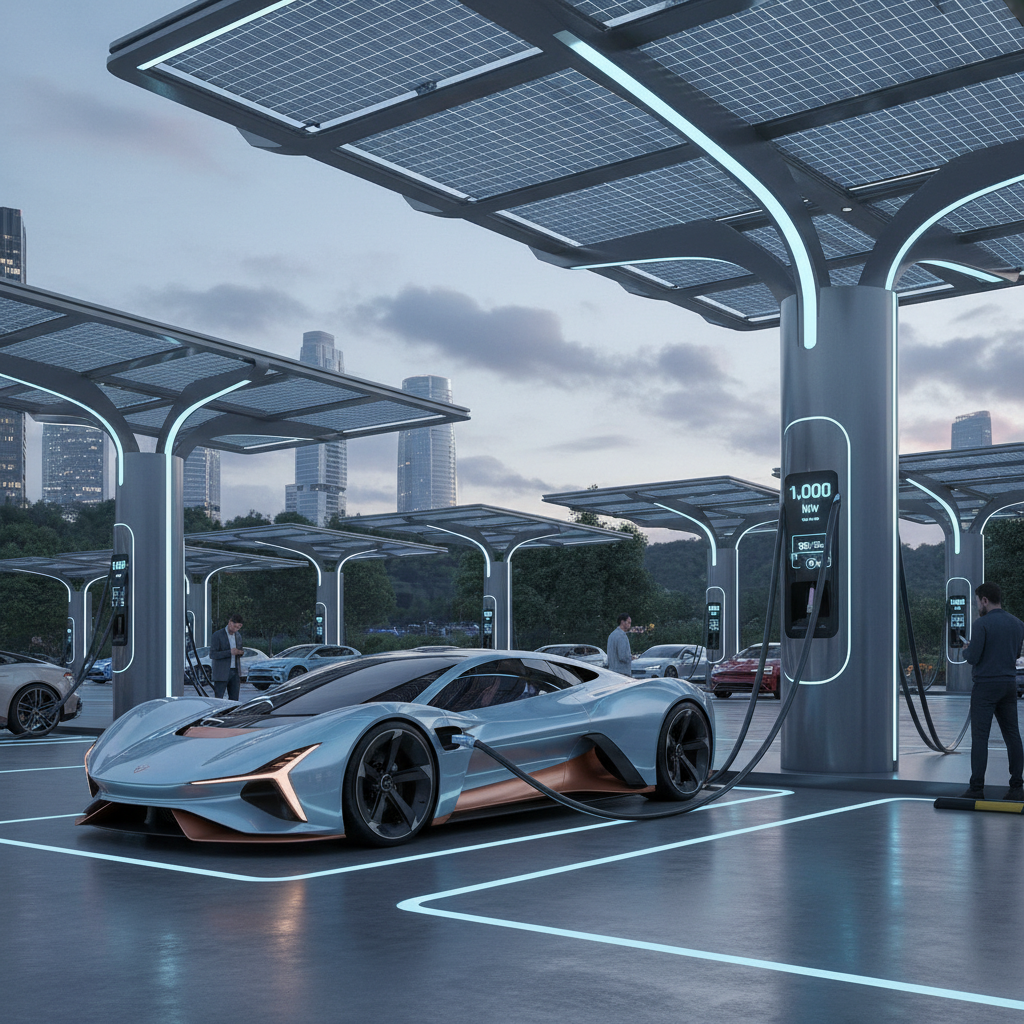
The launch of BYD’s 1,000 kW charging technology showcases a major technological advantage for Chinese electric vehicle makers in the field of fast charging. The new technology combines a “super e-platform” with 10C charging capabilities to deliver 249 miles (400 km) of range in a five-minute period. The current industry standards for high-performance chargers like Formula E’s 600 kW units and Tesla’s Superchargers’ 250 kW output reveal how outdated they truly are when compared to this new technology. China leads EV charging technology with this innovation but US market penetration remains restricted by political challenges.
BYD has advanced its charging technology to enable 10C charging rates with an impressive 1,000 kW output capacity. EVs can now be recharged much faster than before through this technology which minimizes charge time and meets a key concern of consumers. BYD chairperson Wang Chuanfu expressed the company’s objective to achieve EV charging speeds equivalent to gasoline refueling while demonstrating their commitment to revolutionizing electric vehicle driving. BYD’s initial deployment plan includes over 4,000-megawatt chargers to support its new vehicles, the Han L sedan and Tang L SUV within China’s market.
The Technological Advantage: 10C Charging and 1,000 kW Output
Chinese EV producers gain a substantial technological edge through their 10C charging capability and 1,000 kW power output. This development boosts EV ownership convenience and establishes a new standard for charging speed. The technology that allows vehicles to gain significant range quickly could speed up EV adoption because it reduces both range anxiety and concerns about charging time which affect many potential EV buyers. Battery technology has achieved an important milestone with the introduction of the new super e-platform. The combination of this technology with advanced chargers marks significant progress for electric vehicle manufacturing.
US Market Barriers: Political Resistance and Protectionism
BYD’s technological achievements fail to enable full access to the US market because of political restrictions. Lawmakers from both political parties in the US Congress have made concerted efforts to block Chinese electric vehicle manufacturers from entering the American market. Political opposition arises because of worries related to national security and the need to protect domestic industries from economic competition. The protectionist approach toward Chinese EV technology prevents its adoption in the US and creates obstacles for America’s EV development.
The presence of political resistance restricts the accessibility of BYD’s advanced charging technology for American customers. Automakers established in the US market may license this technology even though other possibilities exist. The current political situation creates obstacles that may complicate licensing arrangements of Chinese EV technology in the United States.
Navigating Range Standards and Potential Licensing
Understanding the differences between various range estimation standards remains essential. BYD’s 249-mile range estimation uses the CLTC standard which grants higher numbers than the US EPA standard. Actual range performance under EPA testing standards will probably result in lower values.
The potential to license BYD’s technology persists as a feasible solution even though political obstacles and inconsistent range standards present difficulties. Through licensing agreements the US can adopt faster charging standards which will bridge technological differences and enable more consumers to benefit from rapid charging technology. US consumers would benefit from the latest developments in charging technology.
The 1,000 kW charging technology developed by BYD gives Chinese EV manufacturers a critical technological advantage. The influence of this innovation on worldwide markets especially in the US depends on resolving political challenges and managing different range standards.