
- calendar_today August 11, 2025
Ohio is no stranger to energy transformation. A state historically powered by coal and manufacturing is now pivoting—albeit cautiously—toward clean energy. In 2025, with federal funding flowing in and solar projects expanding in central and southern Ohio, investors are wondering: is this the right time to invest in green energy stocks, or are the risks too great?
Recent declines in clean energy stocks nationwide haven’t spared Ohio-based portfolios. But with major utility companies shifting toward renewables and new hydrogen hubs being developed, long-term growth potential remains on the table. Still, short-term volatility and local political friction create a complicated picture for investors in the Buckeye State.
Green Energy Stocks Under Pressure—Even in Growth Markets
Despite growing demand for renewable energy, clean energy stocks continue to slump in 2025:
- First Solar (FSLR), which operates a major facility in Perrysburg, Ohio, has seen its stock fall 19% year-to-date amid concerns over global oversupply and soft margins.
- ChargePoint (CHPT), whose EV charging stations are being rolled out across Ohio highways, has lost over 35% of its market value as capital constraints and operating losses persist.
Even diversified giants like NextEra Energy (NEE), with energy projects touching Ohio and nearby states, have pulled back on new investments due to high interest rates. The result: investors in Ohio are experiencing the same turbulence as their coastal counterparts, despite strong local demand.
Ohio’s Clean Energy Projects: What’s New in 2025
Clean energy development in Ohio is gaining momentum, thanks in part to the Infrastructure Investment and Jobs Act (IIJA) and new state-level initiatives.
Key developments in 2025:
- Perrysburg Solar Plant Expansion: First Solar’s operations near Toledo received additional federal backing, with a goal of creating over 750 new jobs and doubling production capacity.
- Midwest Hydrogen Hub: Ohio is one of several states included in a multi-billion-dollar regional hydrogen hub supported by the U.S. Department of Energy. Hydrogen infrastructure is expected to boost both job creation and decarbonization in sectors like steel and heavy industry.
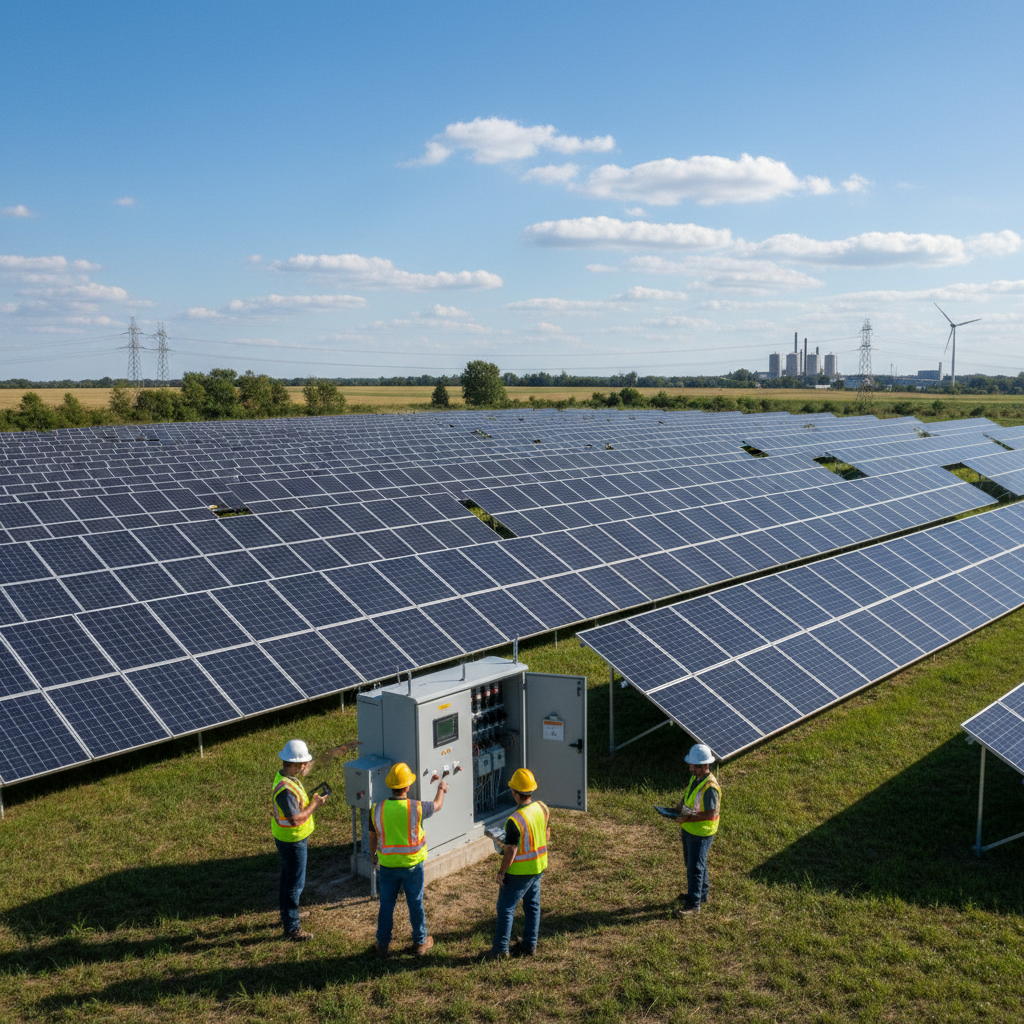
- Appalachian Solar Projects: Multiple utility-scale solar farms are being deployed in southeastern Ohio, including projects by Lightsource bp and AEUG Union Solar, providing new opportunities for grid decarbonization.
Still, transmission limitations and patchy state policy support are slowing implementation. In particular, rural opposition to solar installations in counties like Madison and Union has delayed several proposed projects.
Macroeconomic & Policy Friction
One of Ohio’s challenges in 2025 is a lack of clear state-level policy leadership. While neighboring states like Illinois and Michigan are moving aggressively toward net-zero goals, Ohio’s Renewable Portfolio Standard (RPS) has been watered down in recent years. This makes it harder for developers to justify large-scale investments.
That said, federal incentives remain strong:
- The Inflation Reduction Act (IRA) continues to provide tax credits for clean energy production and storage.
- Inflation has dropped to 2.7% nationally, providing modest relief for developers.
- However, interest rates remain high at 4.5%, making borrowing for new projects in Ohio expensive and slowing the return on investment.
As a result, many Ohio-based projects are moving forward cautiously enough to signal long-term opportunity, but with speed bumps along the way.
ETF Outlook: Ohio Investors Seek Diversification
Given the instability in individual clean energy stocks, Ohio investors are increasingly turning to ETFs.
Popular choices include:
- iShares Global Clean Energy ETF (ICLN): Down 4.8% YTD, reflecting sector-wide underperformance.
- Invesco Solar ETF (TAN): Heavily weighted toward companies like Enphase and First Solar, TAN has dropped over 30% in early 2025.
Despite recent losses, analysts at KeyBanc Capital Markets (based in Cleveland) remain cautiously optimistic. A recent report suggested that while solar and hydrogen stocks may struggle short term, federal support and Ohio’s manufacturing capacity could spark a regional rebound by 2026.
What Local Experts Are Saying
Some Ohio analysts are urging patience.
“The infrastructure is coming, but the capital markets need time to catch up,” said Julie Hartman, a senior energy analyst at Fifth Third Bank in Cincinnati. “This isn’t a speculative play—it’s a long-term investment in energy security.”
Others remain skeptical. Political instability—especially around energy regulations—and local pushback in rural areas have slowed projects and deterred risk-averse investors.
Still, Ohio’s industrial base, central location, and expanding solar manufacturing sector make it a strategic player in the national clean energy transition.
Should You Invest in Green Energy Stocks in Ohio Now?
If you’re in Ohio and considering investing in the green energy sector in 2025, ask yourself:
- Are you prepared for short-term volatility?
- Are you investing based on a 5–10 year horizon?
- Do you believe in federal and state-level energy transition momentum?
If the answer is yes, this could be a good entry point while valuations are down. But be selective: ETFs offer diversification, and stocks with Ohio-specific exposure—like First Solar—may provide a more direct connection to regional growth.
Want to stay ahead of Ohio’s clean energy curve? Subscribe to our local investor digest for monthly updates on hydrogen hubs, solar expansions, and infrastructure bills shaping Ohio’s energy future.