- calendar_today September 3, 2025
That Book You Loved Last Month? It Might’ve Been Written by a Bot
You ever finish a book and just sit there for a minute, heart full, brain spinning—maybe even tearing up a little—and then realize you don’t actually know much about the author? Yeah. Now imagine learning that author isn’t entirely human.
That’s what’s quietly happening all over Ohio right now.
Folks in Dayton, Toledo, Cincinnati—they’re reading AI-written books on their lunch breaks, during late-night wind-downs, even in line at the DMV. And most of the time, they don’t even realize the words were strung together by software. Which is kind of wild, right? Because here, where people still know their librarians by name, stories are sacred.
From Backyards to Bookshelves
There’s this myth that all writers live in coffee shops or New York apartments with floor-to-ceiling bookshelves. But in Ohio? A lot of writers are just trying to squeeze in a few pages before their shift starts or after the kids go to sleep. Some are retired teachers in Akron. Others are twenty-somethings in Kent with side gigs and big dreams.
And now, many of them are using AI tools like Sudowrite, ChatGPT, and Claude to help shape their stories.
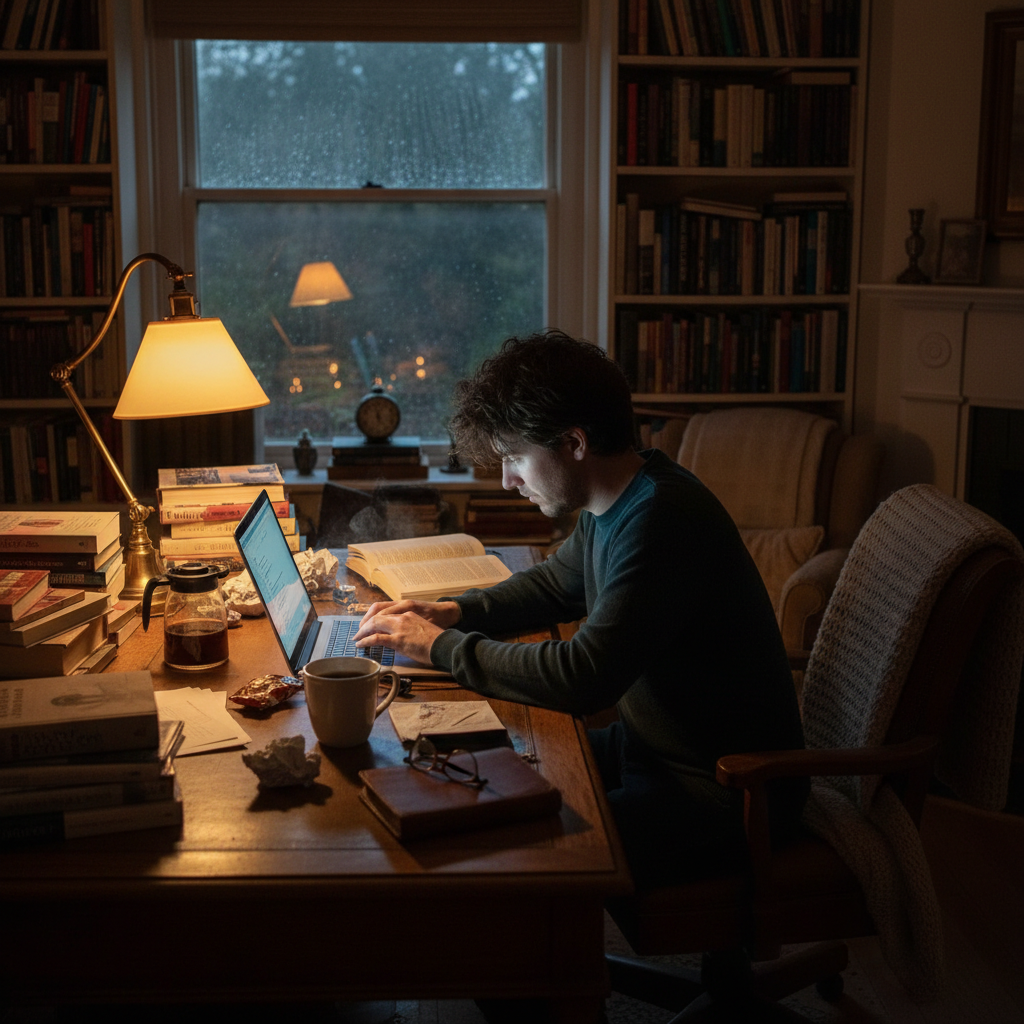
Not to write for them, necessarily. More like having a brainstorming buddy who doesn’t mind if you’re wearing flannel pajama pants and sipping reheated coffee at 2 a.m. It’s changing the game for self-publishers—especially those without agents, contacts, or time to rewrite five drafts by hand.
Some Folks Love It. Others Call It Cheating.
It’s Ohio. We’ve got opinions. And when it comes to AI in publishing, it’s no different.
Ask a dozen local writers, and you’ll get a dozen different takes. One might say, “Hey, it helped me finish a book I’d been stuck on for years.” Another might frown and say, “It’s just not real writing if a machine’s doing it.”
That tension? It’s real. And honestly, kind of refreshing. Because it means people still care about storytelling. About how the words get to the page—not just the fact that they’re there.
Can AI Write Something Worth Feeling?
This is the part that stings a little to admit—sometimes, yeah. It really can.
Especially in genres like romance, thrillers, or cozy mysteries. Those familiar beats? AI knows them well. Give it the bones of a story, and it’ll throw in a few twists you didn’t see coming. There are AI-written books out there right now that have made people cry on the RTA, blush in Kroger, and stay up way too late in small-town libraries with squeaky chairs and buzzing lights.
Is it perfect? No. But sometimes neither are we.
Here’s What Ohioans Are Using AI For
Writers across the state are leaning into AI in ways that are practical, not flashy:
- Plot outlining – turning messy ideas into clear chapters
- Dialogue help – especially for characters that don’t sound quite right
- Writer’s block – getting unstuck after staring at the same sentence for days
- Formatting tools – prepping for self-publishing with AI on Amazon
It’s not just about writing faster. It’s about writing at all—especially for folks juggling jobs, caretaking, or burnout.
What Happens to Voice and Ownership?
Now here’s where things get murky. If AI helped write the book, who owns it? And if it sounds like Colleen Hoover or Stephen King but wasn’t written by them—how is that fair?
Copyright law hasn’t caught up yet. Not really. And in a place like Ohio, where we still have book clubs meeting in basements and libraries that host poetry nights, that kind of matters. Because the voice behind a story? That’s personal here.
But Maybe What Matters Most Is the Story Itself
I think about the stories that shaped me growing up here—sitting in the back corner of the school library with a flashlight, reading after hours, feeling like the book in my hands knew me. It didn’t matter where it came from. It mattered that it felt real.
That’s still true. Whether the writer is a person in Canton or a line of code in the cloud, if the story lands, it lands.
And maybe that’s the new chapter we’re in. One where humans and machines team up, not to replace each other, but to make sure the stories keep coming—for Ohio, and everyone who still believes a good book can change your day. Or your life.