
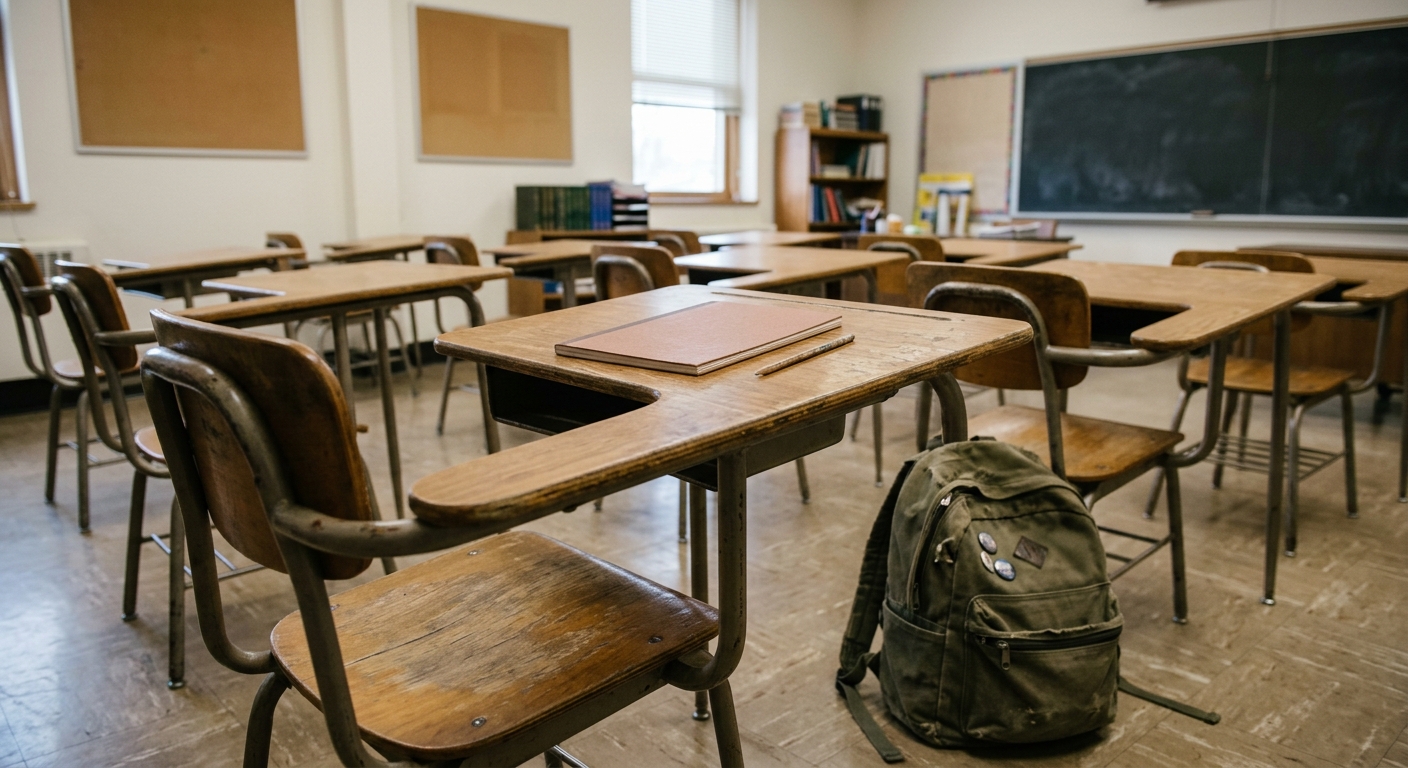
AI-generated illustration; not a photograph of the reported event.
- calendar_today October 11, 2026
Introduction: Rising Absenteeism and Vulnerable Students
As the new school year begins across the United States, classrooms are once again filling with students. However, recent years have seen a notable increase in empty seats, especially among students facing significant adversity. Regular school absences are recognized for their negative impacts on academic performance, future educational opportunities, and economic mobility. Notably, a group that has received little research attention—students who have interacted with child protective services (CPS)—is especially affected by chronic absenteeism.
Ohio State Study Sheds Light on CPS-Connected Students
Research conducted by Arya Ansari, associate professor of human development and family science at The Ohio State University, and published in Children and Youth Services Review, examines the relationship between CPS contact and school attendance. Using data from the ongoing Future of Families Child Wellbeing Study, which tracked 3,334 adolescents in 20 urban cities from birth through age 15, the study focused on student attendance, family reports, and self-reported feelings of school connectedness. The team compared outcomes for children who had CPS contact before age 15 with those who had not.
Key Findings: Absenteeism and School Connectedness
The study found that students with CPS contact were more likely to miss school, for both excused and unexcused reasons, compared to their peers. These students were 14 percentage points more likely to have teachers contact their families regarding attendance problems. Moreover, students involved with child welfare services reported feeling less connected to their schools than classmates who had not interacted with CPS.
Chronic absenteeism is a growing issue nationally. During the 2018-19 school year, about 15% of U.S. K-12 students were classified as chronically absent, meaning they missed at least 10% of school. The COVID-19 pandemic exacerbated this issue, with rates rising to 28% in the 2021-22 year before declining slightly to 24% in 2024.
Understanding the Impact of CPS Contact
Contact with CPS often arises from concerns about children’s safety, including potential abuse, neglect, substance use, or domestic violence. As of 2024, nearly 3 million children underwent CPS investigations in the U.S. Estimates suggest that by age 18, over one-third of all American children, and more than half of Black children, will have some contact with CPS. Ansari explains that this contact brings additional adversity, with families sometimes becoming disengaged—leading to further absences—or becoming hyper-vigilant about school attendance.
The Role of School Connectedness
While previous studies indicate that positive teacher relationships, inclusive environments, and extracurricular programs boost feelings of school connection, this latest research shows that such connectedness only partially explains attendance differences between students with and without CPS contact. Importantly, interventions to increase school connectedness benefit all students but do not necessarily close the attendance gap for those involved with child welfare systems.
"School connectedness is one piece of the puzzle, but it ultimately can’t be the only answer to the adversity these kids face," Ansari said. He suggests that a broader toolkit—including support for housing and income insecurity, food needs, and physical and mental health—is necessary to address the multifaceted challenges impacting these students’ educational outcomes.
Broader Challenges and the Need for Comprehensive Support
Many families dealing with poverty may struggle to provide regular meals or safe transportation to school, compounding student attendance problems. For students facing adversity at home, school can offer a respite and an opportunity for growth. However, Ansari cautions that schools alone cannot counteract larger systemic issues.
The social-relational aspects of education—relationships among students, teachers, and peers—remain essential components of any approach to improve attendance and educational outcomes for children impacted by child welfare involvement.
Conclusion: Next Steps for Schools and Communities
While improving school connectedness is helpful, the findings indicate it must be part of a comprehensive strategy targeting the many adversities faced by children who have CPS contact. The study was co-authored by Kierra M.P. Sattler of the University of North Carolina at Greensboro, and contributes to a deeper understanding of the intersection between child welfare, poverty challenges, student support, and school absenteeism.
Source: news.osu.edu.