- calendar_today August 7, 2025
Tariffs on Chinese Goods Could Devastate Board Game Ecosystem
Board games are, by and large, a very different industry from many others in consumer goods. Creative, collaborative, and driven by a strong sense of community, it also operates on comparatively low profit margins. A new tariff on Chinese-made board games imported into the United States has sent a jolt of fear throughout the industry, as many say that the financial hit could make the future of that industry very uncertain.
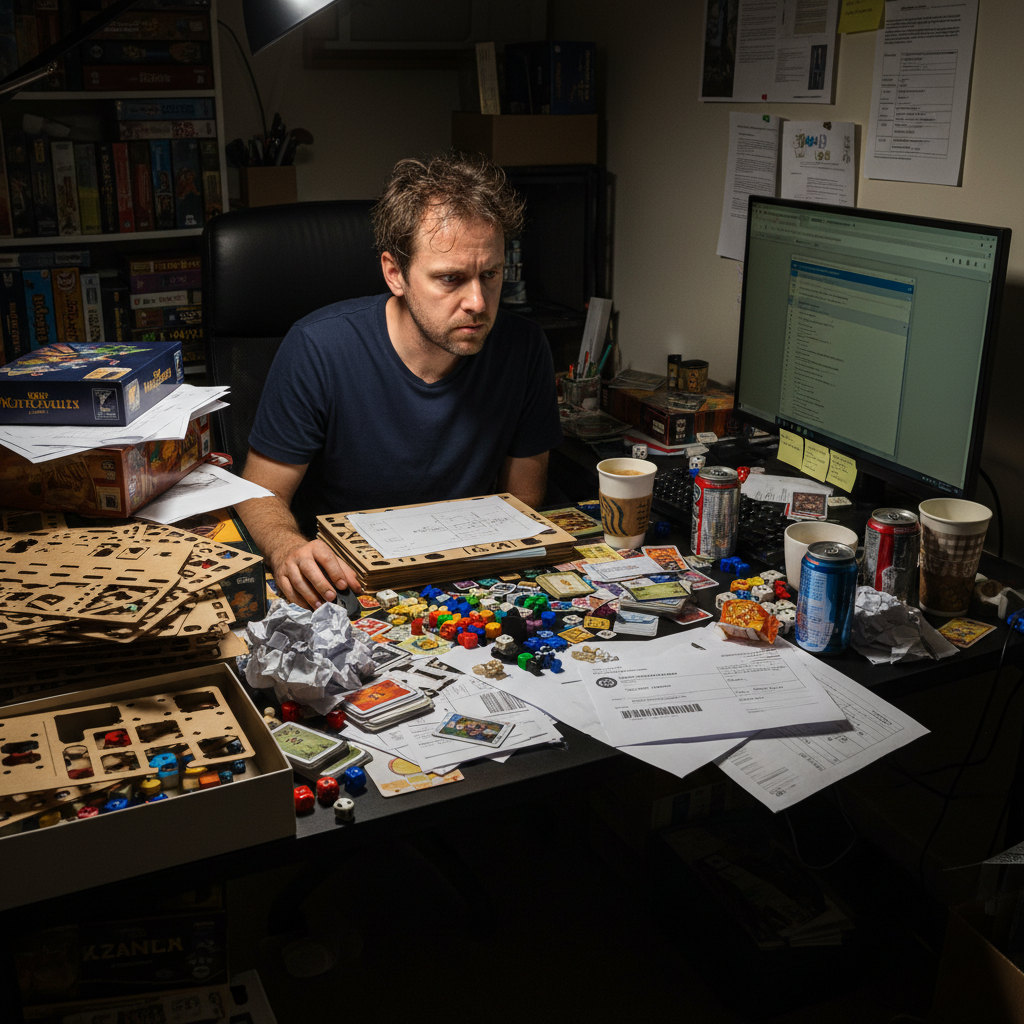
Board game designer Jamey Stegmaier, best known for global hits like Scythe and Wingspan, shared his surprise and anger at the recently announced 54 percent tariff on goods coming into the U.S. from Chinese manufacturers.
“I tried to work on a new game I’m brainstorming last night, but it’s really hard to create something for the future when that future looks so grim,” Stegmaier wrote on his blog. “I mostly just found myself staring blankly at the enormity of the newly announced 54 percent tariff.”
For someone who has already designed games that have become favorites all over the world, this was an unusually personal and emotional statement. But his worries speak for a wide swath of the industry.
Making Games, Breaking Borders
America is already heavily dependent on China for board game manufacturing. There are factories in Germany, for example, that make games and components. (Germany, as the spiritual center of modern tabletop gaming, has a proud manufacturing history all its own.) But when it comes to a full-service production run for a modern, high-quality game, American publishers head to China for the simple reason that it is cheaper.
Not just cheaper, but staggeringly so. Printed cards? China. Custom plastic figurines and wooden tokens? China. Die-cut game boards? China. Specialty dice? China. It’s all far, far less expensive to produce in China than in the United States or Europe.
It is possible to make the components here. But not, most people have found, at a price that makes economic sense. “I was once quoted $10 by a U.S. manufacturer,” Stegmaier noted, “but that was for just a standard, empty game box. Not even with art and graphics, just for a game box. For $10 in China, you can get that box and hundreds of game pieces printed and packaged in a box.”
This is why the 54 percent tariff is so catastrophic. For most game publishers in the U.S. (especially the small to mid-size ones, which make up the majority), there is often only a few percentage point profit margin built into the price of a new game. There is no cushion for added costs in that. Add in the fact that there was no warning or phase-in period, and it’s no wonder that the entire community is in shock.
Other Notables in the Industry Weigh In
Stegmaier is far from the only game designer or publisher weighing in on the issue. Meredith Placko, CEO of Steve Jackson Games (makers of Munchkin and other long-running lines), shared similar worries and frustrations.
Placko also stressed that, like most game publishers in the U.S., her company makes most of its manufacturing choices for the same reasons. “I get that some people ask, ‘Why not manufacture in the US?’” she wrote. “I wish we could. But the infrastructure to support full-scale boardgame production—specialty dice making, die-cutting, custom plastic and wood components—doesn’t meaningfully exist here yet. I’ve gotten quotes. I’ve talked to factories. Even when the willingness is there, the equipment, labor, and timelines simply aren’t.”
This tariff, she said, isn’t a policy change. “This isn’t just a policy change,” she said. “This is a seismic shift in how the industry has functioned for decades.”
Rob Daviau, co-founder of Restoration Games and designer of Pandemic Legacy, has also been outspoken for some time now about the new tariffs. He has tweeted a version of the same sentiment for months, saying that nearly every meeting he’s had has “turned into an existential crisis about our industry.”
In an interview with BoardGameWire, Daviau predicted a “great collapse in the hobby gaming market in the US” if tariffs like the one just enacted are ever brought to bear.
Who Will Bear the Brunt?
Publishers and designers aren’t the only ones who may pay a price. Consumers will likely also start to see the fallout of these tariffs. Gamers can probably expect higher retail prices for new games. There’s also the likely scenario that publishers who attempt to make up for the cost increases by cutting quality may find their games cheaper, but also of noticeably poorer quality than in the past. The third and perhaps likeliest option is that many companies may simply cut back their new releases.
Long-term, there’s also the effect on local game stores to consider. As those businesses have been having a hard time against online competition for some time now, gamers may increasingly play off their existing collections (perhaps many of those games they keep in their “shelves of shame” will finally see the table) or simply buy more online, where they can get better deals, further hurting local stores.
“It will take a few months, but within a few months, US companies will lose a lot of money and/or go out of business,” Stegmaier wrote. “And US citizens will suffer from extreme inflation.”
The Search for Options
There are some possible loopholes for publishers who work with non-U.S. distributors, which may be an option for some. European markets, for example, have not seen these kinds of massive tariff increases.
But that’s not a real option for American publishers and designers. “The reality is that my company’s sales are 65% US customers,” Stegmaier pointed out, “so the hit is going to hurt, and not in a small way.”
The one galling part of the equation may be that there was little to be done for those whose games were already in production. Games still in the design phase or not yet in production may still have options for budget revisions, but any games already made and on their way from China cannot escape the tariff.
“We have 8,000 games leaving a factory in China this week that now need to figure out how to pay the import bill to get into the US,” Chris Solis, founder of California-based Solis Game Studio, told Ars Technica.
Is There a Lobby in This?
Board game publishers have an official trade association, the Game Manufacturers Association (GAMA). It has been active in trying to lobby against the tariffs, and says that it has engaged in lobbying efforts both in May and July. To date, there’s been little change.
There is more bad news for board game publishers. GAMA says that most other imports facing similar tariff increases will have the benefit of a 180-day grace period while any disputes with China are adjudicated. The exception is game publishers, and some in the industry have noted that the Bureau of Customs and Border Patrol is also deliberately not processing returns for publishers, which may make it harder to send games back and get at least a portion of the money back.
Frustrations Grow
The industry is a vocal one, in the best sense of the word. A community that has thrived on working together and creative collaboration is coming together to vent its frustrations, once again using the tools of social media that made so many of its games so popular in the first place.
As the dust begins to settle, the message coming through is that the industry is facing a crisis that could upend its modern growth in one of the most rapid fashion in recent memory. It’s not a happy message for an industry that, at its core, makes people happy.