
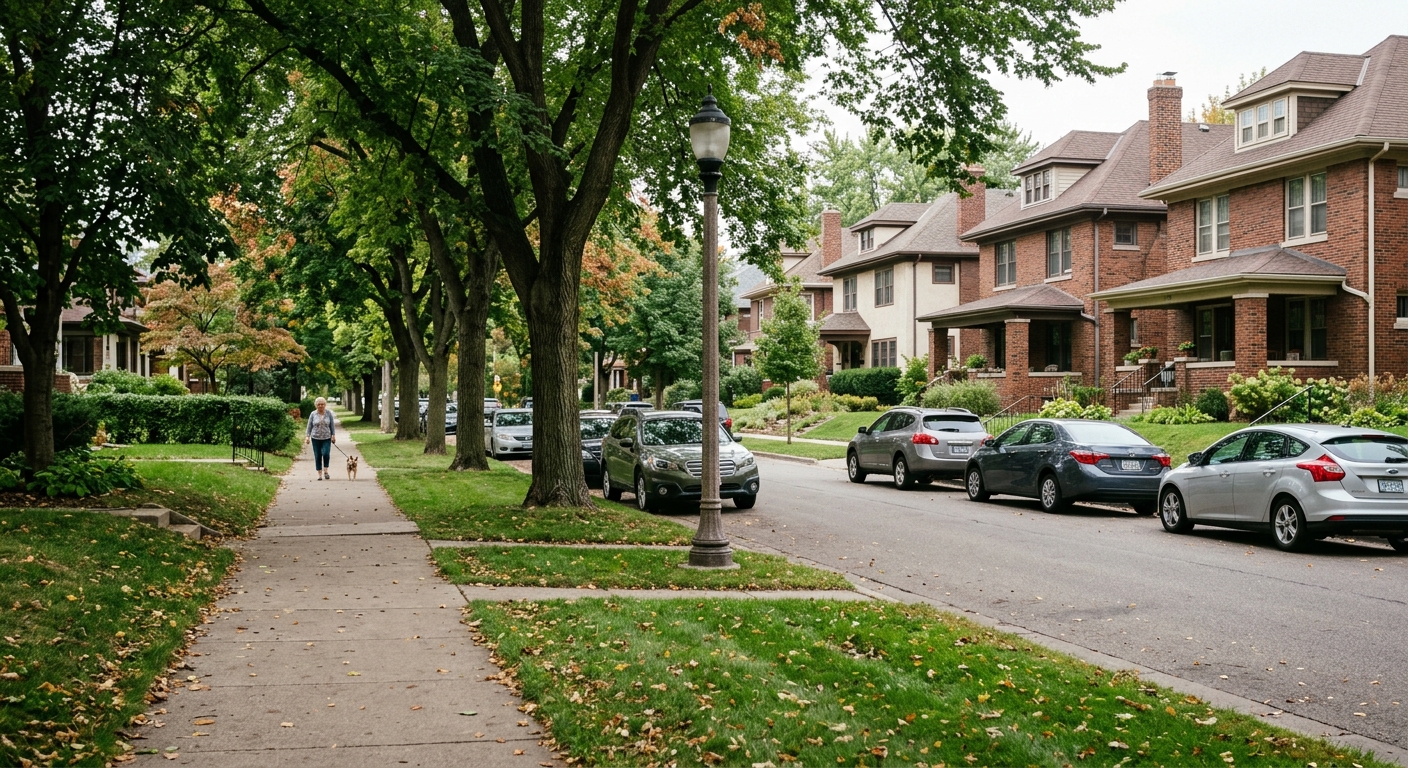
AI-generated illustration; not a photograph of the reported event.
- calendar_today October 14, 2026
Green Space and Community Safety: Exploring the Connection
New research from The Ohio State University sheds light on the role of green space—such as parks and street-side plants—in reducing gun-related homicides. However, the impact of greenery isn't uniform across different communities, emphasizing the importance of neighborhood context in violence prevention efforts.
Background: The Complex Relationship Between Green Space and Gun Violence
Numerous studies suggest that urban greenery, including tree-lined streets and parks, enhances both individual and public health. Benefits range from encouraging physical activity and reducing stress to improving air quality. Past research has also linked these green spaces with lower rates of gun violence and other crimes, though the mechanisms remain unclear.
Gia Barboza-Salerno, an associate professor in Ohio State’s colleges of social work and public health, notes that understanding the effectiveness of green spaces requires examining the local context. "It’s not as simple as planting a tree and thinking that alone will solve it," Barboza-Salerno said.
Study Methods: Combining Google Street View and Machine Learning
The study, published in Urban Forestry & Urban Greening, investigates how the intersection of green space, neighborhood disadvantage, and gun violence plays out in Cook County, Illinois—the U.S. county with the most homicides in 2022. The research team, led by Barboza-Salerno, analyzed 899 firearm homicides and 2,256 natural deaths from 2023.
To assess the amount of greenery visible to pedestrians, the study deployed Google Street View imagery and utilized machine learning and geospatial artificial intelligence (GeoAI) tools. The researchers compared the presence of tree canopy and other greenery at the locations of deaths, as well as proximity to parks and walkable streets, matching each homicide with natural deaths of individuals similar in age, sex, and race nearby.
Key Findings: Neighborhood Disadvantage Plays a Critical Role
The findings indicate that higher levels of visible green space—specifically, tree canopy and greenery along walkable streets—are linked to lower odds that a death in that location was a firearm homicide. However, the protective benefits of green space are not universal and depend greatly on neighborhood context.
Tree cover and greenery reduced the risk of firearm homicides more effectively in less disadvantaged neighborhoods. In contrast, proximity to parks in the most disadvantaged areas was paradoxically associated with higher risks of gun-related deaths. The researchers suggest that broader measures of social disadvantage—such as poverty, economic inequality, and substandard housing—can override the potential safety benefits of green space in these environments.
Insights from Researchers: Green Space as Part of a Broader Strategy
Barboza-Salerno emphasizes that, while green space is a vital violence-prevention measure, its effects are shaped by social and economic factors. "Green space should be thought of as a violence-prevention intervention, yet the green space that does the most protective work tends to be concentrated in more advantaged neighborhoods. That’s a double inequity: disadvantaged areas get less quality green space, and the green space they get is less protective without other supports," Barboza-Salerno said.
Community upkeep and involvement also matter; parks in disadvantaged areas often become neglected and less effective as safe communal spaces, while better-maintained parks in wealthier areas foster neighborhood cohesion and vigilance.
Study Limitations and Broader Implications for Urban Planning
Co-author Taylor Harrington points out that the research looked strictly at the environmental conditions present at the locations of deaths, not overall individual experiences. The findings suggest that urban planning and violence prevention should incorporate equitable distribution of quality green space alongside broader social support strategies.
Other contributors to the study include Balaji Ramesh and Jeffrey Wing from the College of Public Health at Ohio State. Barboza-Salerno’s prior work in Boston also highlights the potential for community-driven approaches, where local youth help revitalize parks, as part of a wider effort to reduce violence and support community well-being.
Source: news.osu.edu.