- calendar_today August 19, 2025
As OpenAI drives global AI expansion, Ohio assesses how AI adoption is reshaping local industries, job markets, and economic opportunities across the state.
Artificial Intelligence (AI) is no longer on the horizon—a force for economic change now. With OpenAI leading a wave of global AI expansion, Ohio and other states are watching the ripple effect closely on their industries, workforce, and innovation ecosystems. With OpenAI technologies and tools creating waves globally, Ohio is poised to take advantage of the opportunities while preparing to meet the revolutionary challenges of the future.
From the production lines to banks, hospitals, and schools, Ohio feels the presence of AI already. As Ohio evolves with this revolution, entrepreneurs, educators, and policymakers are coming together to ensure that Ohio is competitive in this age of AI.
How AI Expansion is Redefining Ohio’s Economy
OpenAI’s global expansion, driven by its leadership’s strategic vision, is making advanced AI solutions more accessible to organizations of all sizes. For Ohio, this means new tools, investment opportunities, and workforce dynamics that could reshape the economic landscape.
AI automation, big data analytics, and machine learning processes are rapidly taking their place in Ohio’s key industries. Companies are adopting AI to lower costs, improve productivity, and develop new products and services. The labor market of the state is also transforming to cater to the increased need for technologically-savvy employees.
Use of AI in Ohio’s Key Sectors
1. Manufacturing Innovation
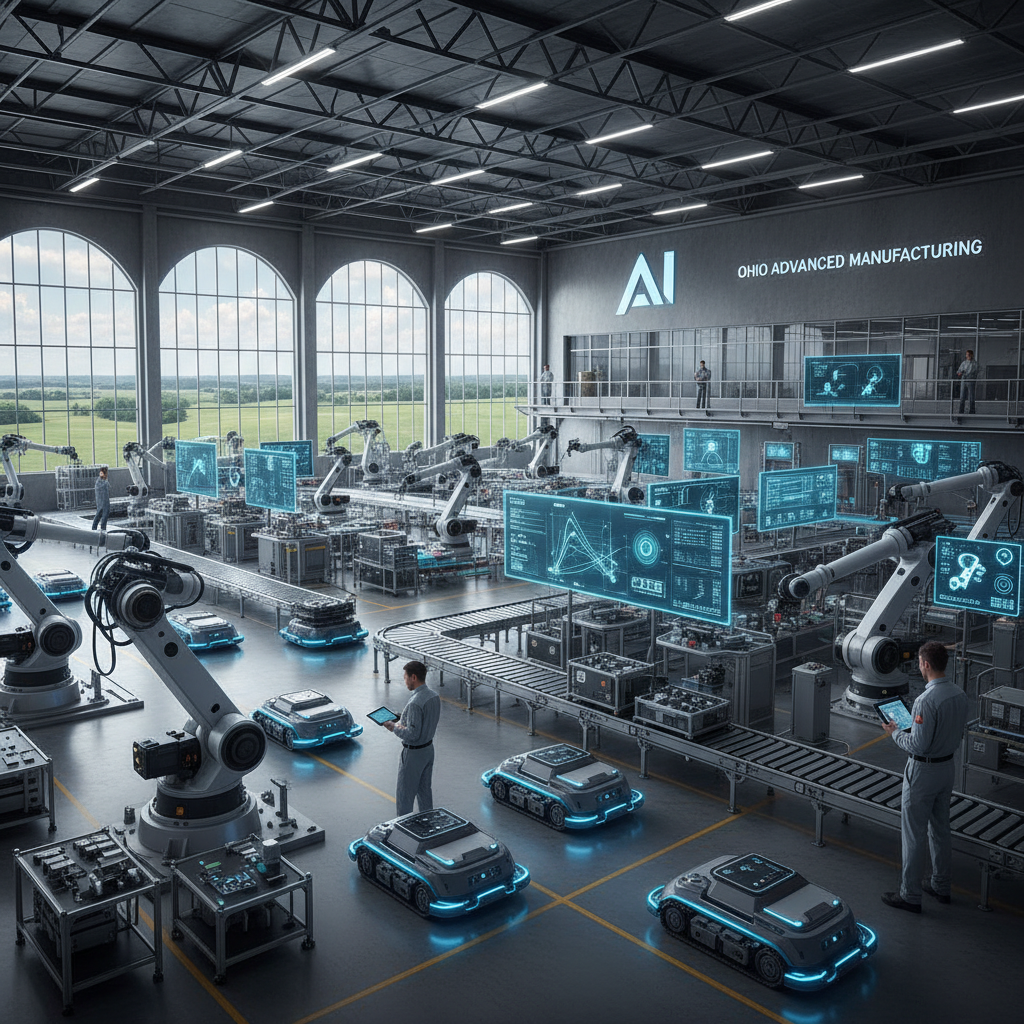
Ohio has long been a manufacturing giant, and AI is assisting in keeping that tradition going. Intelligent systems are utilized in factories to boost accuracy, forecast equipment breakdowns, and minimize expensive downtime. Robotics, quality control, and artificial intelligence-based supply chain optimization are making it safer and more efficient.
The integration of AI is lean-ing Ohio’s manufactur-ing industry leaner to be more compet-itive, both in the domestic and international markets—a positive step towards further automa-tion in the years to come.
2. Healthcare Advancements
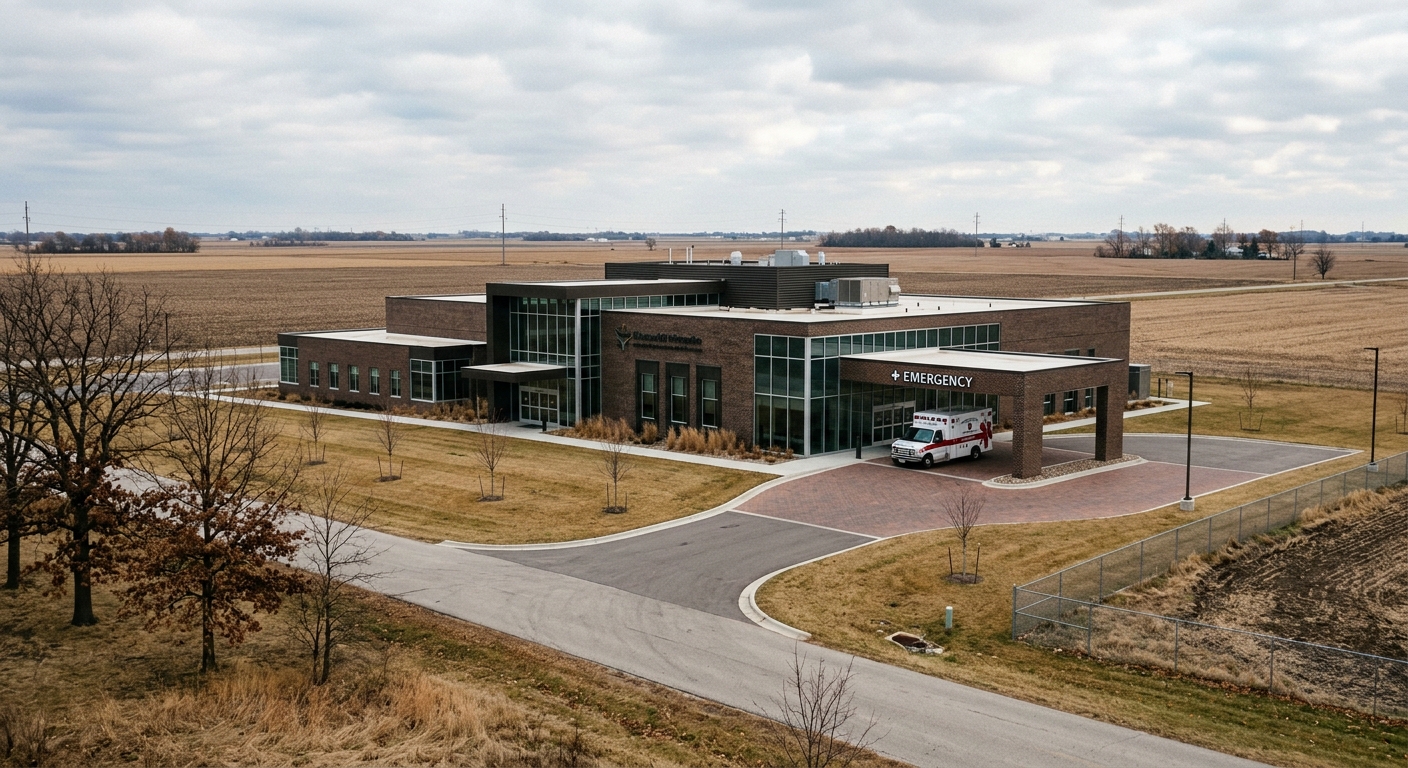
Ohio is a leadership location of choice for the healthcare and biotech industry. Hospitals and research centers throughout the state are utilizing AI solutions to expedite diagnosis, tailor treatment, and streamline patient care.
With AI, physicians can sort through tremendous amounts of data, from electronic health records to imaging studies, to diagnose patients faster and more accurately. Personalized medicine and the discovery of drugs are also being optimized, with a potential for improved disease control and recovery rates.
3. Redefining Financial Services
In Cincinnati and Columbus, and other urban areas, banks employ AI to authenticate transactions, identify counterfeit ones, and analyze consumer habits. AI applications today can screen actual financial transactions to identify potentially fraudulent activities, more accurately rate credit risks, and utilize automated customer services.
This, along with increased security, is also improving customers’ experience as well as providing financial institutions with data-driven lending, investment, and market trend-making decisions.
4. AI in Workforce Learning and Training
Ohio’s AI future is in education. Colleges, universities, and technical institutions are increasing their AI, data science, and cybersecurity courses to prepare the future workforce.
Institutions like Case Western Reserve University and The Ohio State University are developing collaborations with government agencies and technology to promote career preparedness and AI research. Through curricular renewals and experiential AI labs, students are being prepared to meet the rapidly expanding needs of data scientists and AI experts.
Economic Growth and Job Market Transitions
Though AI brings in some efficiency gains, it brings in complexity to the labor force. Some of the traditional jobs are vanishing with automation, but other emerging ones require digital literacy, flexibility, and problem-solving.
Ohio’s Workforce Development:
- State-subsidized AI certification and upskilling programs influenced displaced workers.
- University-industry partnerships to develop AI research, innovation, and applied training.
- AI job titles on the rise, including software development, cybersecurity, machine learning engineering, and AI ethics.
This trend emphasizes continuous learning and being flexible as the workforce adjusts to technology-driven requirements.
The Road Ahead: Balancing AI Growth and Ethical AI Use
As the times are completely shifting with the implementation of AI in the globe, Ohio is also being cautious in embracing it. Business leaders and policymakers are encouraging utilization of AI to be ethics-based in nature, where transparentry-based decision-making, data privacy, and algorithmic bias are areas of concern.
OpenAI has ignited worldwide discussion about developing AI responsibly. Ohio is now contributing to this discussion, interacting with legislation that is innovation-friendly but also protects public safety and trust. This balance is the key to making AI accessible to all Ohio communities.
Conclusion: Ohio’s Place in the AI Future
While OpenAI is taking the world forward in AI development, Ohio is at the crossroads when it comes to economic growth. By investing in education, infrastructure of innovation, and establishing ethical standards for using AI, the state is positioning itself for success in the future.
Ohio’s companies are using AI to remake, its employees are reskilling to benefit from new possibilities, and Ohio’s institutions are equipping themselves for an AI future. If the trend holds, Ohio won’t be watching the AI revolution—it will be leading it.